

.png)
.png)
.png)
In a veterinary clinic, every minute matters.
From the moment the phones start ringing, your team is balancing appointments, patient records, procedures, prescriptions, and concerned pet owners. It’s a fast-moving environment where there’s very little room for delays or disruptions.
That’s why technology plays a much bigger role than many clinics realize.
Most of the time, your systems quietly work in the background. Scheduling software, patient records, payment systems, email, imaging equipment, and cloud applications all help keep the day moving forward.
But when something breaks, everything slows down.
A computer that won’t connect. Missing records. Slow software. Internet outages. Security concerns. Even small technology issues can quickly create stress for your team and frustration for clients.
And in some cases, it can impact the level of care your clinic is able to provide.
Many veterinary practices operate with technology setups that have simply evolved over time.
New software gets added. Older computers stay in service longer than planned. Passwords are reused. Backup systems are rarely tested. Staff work remotely or access systems from personal devices.
None of these things seem urgent on their own.
But together, they can create real operational and security risks.
Some of the most common technology challenges we see in veterinary clinics include:
The problem is that many of these risks stay hidden until something goes wrong.
Your veterinary team already has enough to focus on.
Technology should help reduce stress, improve efficiency, and make it easier to deliver excellent care to every patient that walks through your doors.
The right IT strategy can help your clinic:
Often, the biggest improvements come from small changes that make systems more reliable and easier to manage.
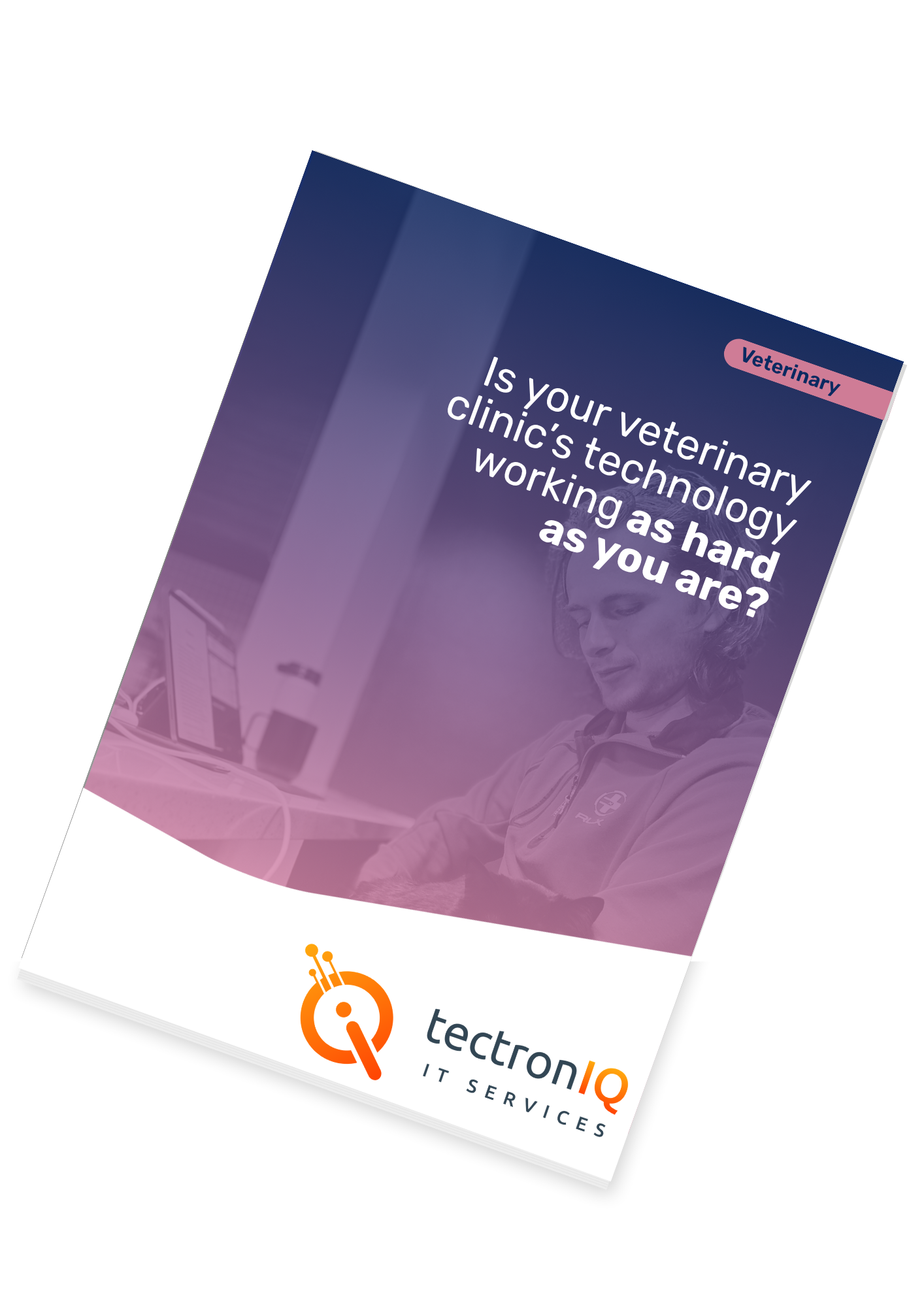
Our latest guide takes a practical look at how technology supports modern veterinary clinics.
Inside, you’ll learn:
If your clinic depends on technology every day, this guide will help you better understand where your systems may be helping — and where they may be creating unnecessary risk.
Download your free copy today and discover how smarter technology can help your clinic operate more efficiently, securely, and confidently.

You’ve got a business to run. We’ve got your back. We help teams stay strong with fast, flexible IT—95% of calls answered in 20 seconds or less. Let’s make sure your tech works as hard as you do.