
You shouldn’t have to ask, “What’s going on?” We document every setup, change, and issue. With clear reporting and real records, you’ll always know what’s being done and why—because trust thrives on transparency.



.avif)
.avif)
It starts small. A vendor asks for a version number. A regulator wants proof of a patch. Your team needs to know what changed—and no one’s quite sure. Suddenly, you’re chasing breadcrumbs. Time slips away. Deadlines close in. Confidence fades.
What’s worse? The sense that no one has your back. You’re left hoping someone, somewhere, wrote it down. You shouldn’t have to hope. You should know.
We don’t just fix issues—we track the story behind them. Every patch, scan, and change is recorded, labeled, and stored securely. Updated within 48 hours. Exportable whenever you need it. No waiting. No digging.
Need proof for an insurance renewal? Done. Vendor asks for your security protocols? It’s there. Everything you need, in one place. Organized. Accessible. Yours. Because when you know where you stand, you move faster—and with more confidence.

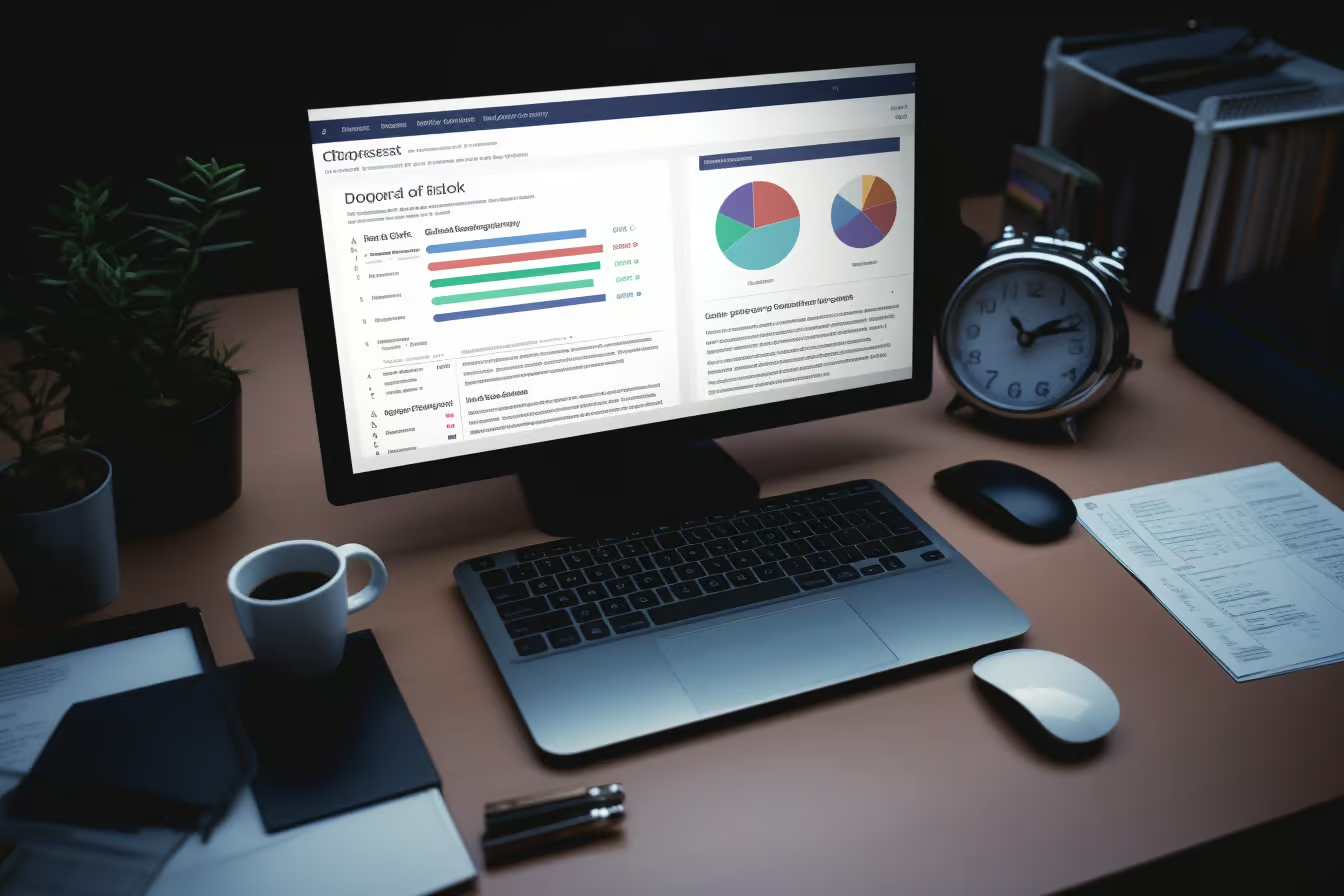
This isn’t just a checklist. It’s a living system that documents your entire IT environment—hardware, software, policies, timelines, and fixes. Every step, every update, captured 24/7.
We use industry-leading tools like Hudu and Syncro to centralize your information and keep it secure. So when audit day comes, there’s no panic. No scramble. Just a clean, clear record that speaks for itself.
It’s how you build trust—with clients, vendors, regulators, and your own team.
We believe if it’s not documented, it’s not done. That’s why every action we take on your systems is logged—accurately and fast. Within 48 hours, it's in your hands, stored securely in your private portal.
You don’t have to chase answers. You already have them. That means smoother audits, faster troubleshooting, and fewer “I don’t knows.” From licenses to system changes, we give you the full picture—on your terms. Because clarity is power. And you deserve nothing less.

When you work with tectronIQ IT Service, you’re not handed a messy spreadsheet or some generic report. You’re getting clean, dependable documentation that makes your job easier—and your business stronger. We make it make sense.
You deserve better than guesswork. With tectronIQ’s documentation & reporting, you’ll know what’s been done, what’s pending, and how your systems are performing—without chasing anyone down.
Let’s clean it up. Let’s build confidence back into your tech stack. Whether you're facing an audit, dealing with regulators, or just tired of patchy records—we’ll make sure the answers are already in front of you.
Let’s start with one call. We’ll handle the rest.
What exactly is IT documentation used for?
IT documentation is how we track everything that matters—your patches, updates, device changes, and system notes. It keeps your operation clean, traceable, and ready for anything without chasing scattered details.
How does IT asset reporting help audits?
Strong IT asset reporting means every piece of hardware and software is accounted for. When auditors come calling, you don’t scramble. You just open the report—and show them everything they need.
How often is IT documentation updated?
We update IT documentation within 48 hours of any change. That includes asset moves, software installs, or security updates. It’s how we keep you clear, accurate, and one step ahead.
Can I access my IT asset reporting anytime?
Yes—24/7. Your IT asset reporting lives in a secure portal you control. Whether it’s for compliance, budgeting, or planning—we give you full access without needing to ask twice.
Is this IT documentation easy to understand?
Absolutely. IT documentation shouldn’t be cryptic. Ours is built for people, not just techs. You’ll know what was done, when, and why—clearly, without a deep dive into IT jargon.
Why is quality IT asset reporting important?
Because when things go wrong—or need to go right—you want answers, not guesses. Quality IT asset reporting gives you visibility, faster decisions, stronger security, and cleaner operations. It’s essential, not optional.

You’ve got a business to run. We’ve got your back. We help teams stay strong with fast, flexible IT—95% of calls answered in 20 seconds or less. Let’s make sure your tech works as hard as you do.