

.png)
.png)
.png)
When the internet goes down or an important system stops working, everyone notices.
Work stops. People get frustrated. And fixing the problem quickly becomes the priority.
But some of the biggest productivity problems aren’t nearly as obvious.
They’re the extra few minutes someone spends searching for a document.
The spreadsheet that needs information copied into it manually.
The application that takes too long to load.
Or the process that requires six steps when it should only take two.
Individually, these frustrations might not seem worth worrying about.
But when they happen every day, across an entire team, they can quietly steal hours from your business.
Think about the technology your team uses every day.
How often does someone have to switch between different applications to complete a simple task?
How much time is spent searching through folders, emails, or Teams conversations for information?
Are employees entering the same information into multiple systems?
Does someone regularly have to chase another person for an update before they can continue their work?
These are productivity leaks.
And because work still gets done, they’re surprisingly easy to ignore.
The problem is that your employees compensate for them.
They create workarounds, add extra steps, or simply accept that certain tasks take longer than they should.
Eventually, inefficient processes start to feel normal.
One of the best places to look for productivity problems is at the shortcuts your employees have created.
A personal spreadsheet might exist because the main system is too difficult to use.
Someone might send documents through email because they struggle to find them in your shared folders.
Employees may use an unofficial application because the approved tool makes a task unnecessarily complicated.
These workarounds aren't necessarily the problem themselves.
They're often a clue that something underneath needs attention.
Instead of asking employees to work harder or faster, it can be much more effective to ask why the task is difficult in the first place.
When businesses want to improve productivity, the temptation can be to add another application or system.
But more technology isn't always the answer.
Sometimes the biggest improvements come from making better use of what you already have.
That could mean automating a repetitive process, reorganizing information so it's easier to find, connecting systems that currently operate separately, or removing unnecessary steps from a workflow.
Even a small improvement can make a noticeable difference when it's repeated dozens or hundreds of times every month.
Good technology should make it easier for your employees to do their jobs.
They shouldn't have to fight with systems, search endlessly for information, or invent complicated workarounds just to complete routine tasks.
By identifying the small points of friction in your business, you can create a working environment that's simpler and more efficient.
And that doesn't mean asking your team to squeeze more into their day.
It means giving them back the time they're already losing.
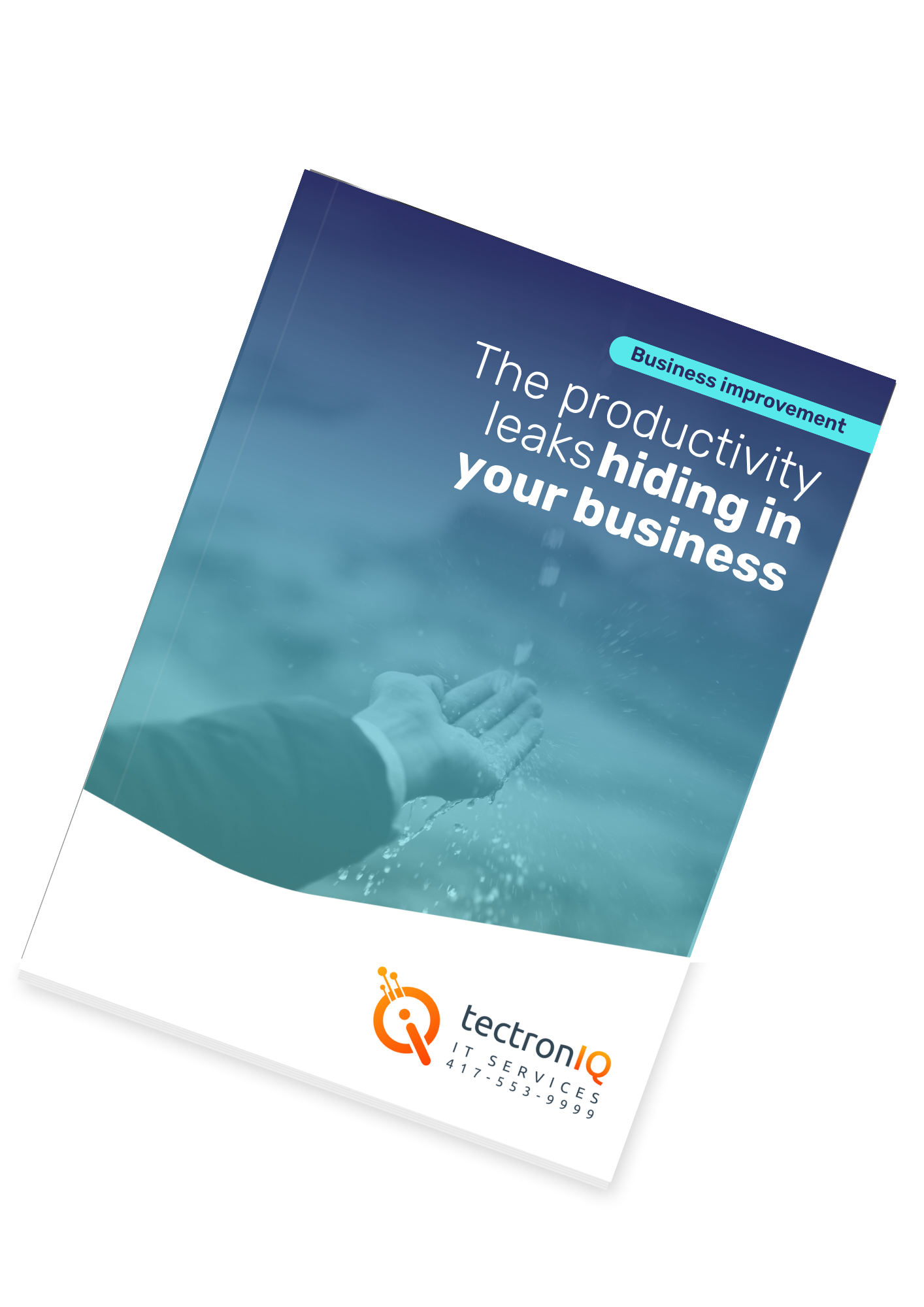
Our latest guide takes a closer look at the hidden productivity leaks that can build up inside a business.
You'll discover:
You don't always need a major technology overhaul to make your business more productive.
Sometimes, you just need to find the small things getting in your team's way.
Download your free copy today and discover where your business could be winning back valuable time.
You’ve got a business to run. We’ve got your back. We help teams stay strong with fast, flexible IT—95% of calls answered in 20 seconds or less. Let’s make sure your tech works as hard as you do.