

.png)
.png)
.png)
When people think about cybersecurity, they often picture firewalls, antivirus software, or sophisticated security tools.
Those technologies are essential—but they're only part of the equation.
The reality is that many cyber incidents don't begin with advanced hacking techniques. They begin during ordinary moments in the workday.
An employee clicks a convincing email.
A password gets shared to save time.
A former employee's account isn't removed.
Someone connects to public Wi-Fi without thinking twice.
None of these actions are intentional. They're simply the result of people trying to get their jobs done.
That's why the most secure organizations focus on more than technology. They create a culture where cybersecurity becomes part of everyday decision-making.
A security-first culture means that everyone in the organization understands they play a role in protecting the business.
Cybersecurity isn't viewed as the IT department's responsibility alone.
Instead, it's built into daily routines, workplace conversations, and business processes.
Employees know how to recognize potential threats, understand why security policies exist, and feel comfortable asking questions when something doesn't seem right.
Security becomes a shared responsibility rather than an afterthought.
Building stronger cybersecurity doesn't always require major investments.
Often, it's the small, consistent habits that have the greatest impact over time.
These habits include:
Individually, these actions may seem minor.
Together, they create multiple layers of protection that make it much harder for attackers to succeed.
One of the biggest misconceptions about cybersecurity is that stronger security always makes work more difficult.
In reality, the best security practices are designed to support employees—not frustrate them.
Clear policies, practical training, and user-friendly security tools help employees make good decisions without slowing productivity.
When security fits naturally into everyday workflows, people are much more likely to follow it consistently.
The goal isn't perfection.
It's creating an environment where making the secure choice becomes the easy choice.
A security-first culture isn't built through a single training session or annual policy review.
It develops over time through:
As cyber threats continue to evolve, businesses that invest in their people become far more resilient than those relying solely on technology.
Creating a stronger security culture doesn't have to be overwhelming.
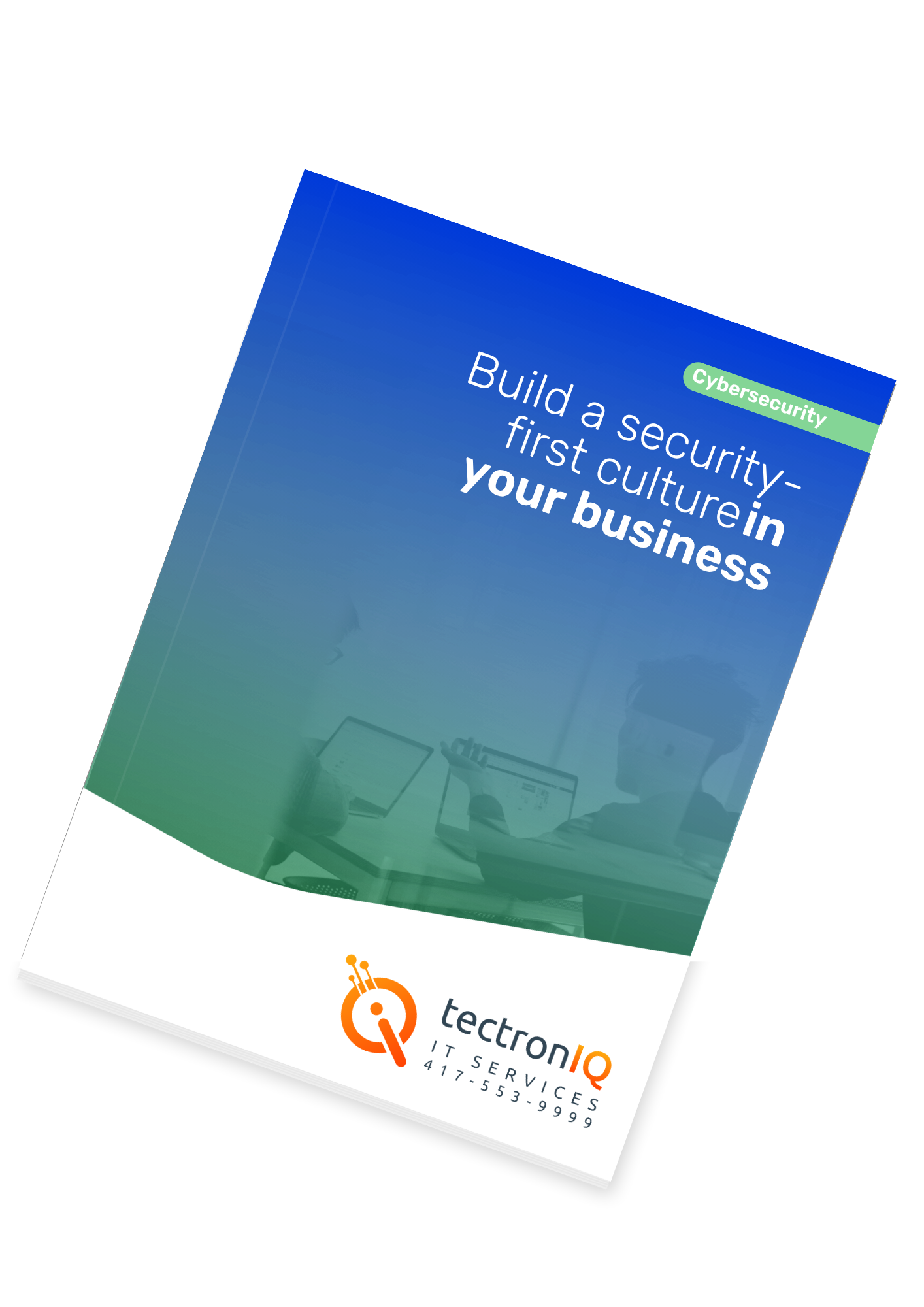
Our latest guide explains how businesses can strengthen cybersecurity by helping employees develop better habits and make smarter decisions every day.
Inside, you'll learn:
Cybersecurity is strongest when everyone plays a part.
Download your free guide today and discover how building a security-first culture can help protect your business from today's evolving cyber threats.

You’ve got a business to run. We’ve got your back. We help teams stay strong with fast, flexible IT—95% of calls answered in 20 seconds or less. Let’s make sure your tech works as hard as you do.