
.png)
.png)
.png)
If a client, auditor, regulator, or insurance provider asked you detailed questions about your cybersecurity today, would you be confident in your answers?
Many business owners assume their security is adequate because they have antivirus software, strong passwords, and a firewall in place.
But cybersecurity expectations have changed dramatically over the past few years.
Organizations handling sensitive information are increasingly being asked to demonstrate not only that security measures exist, but that those protections are actively monitored, maintained, and continually improved.
For regulated businesses, cybersecurity is no longer simply an IT concern. It's a business requirement.
Data breaches, ransomware attacks, and compliance failures continue to make headlines.
As a result, regulators, customers, insurance providers, and business partners are demanding greater accountability when it comes to protecting sensitive information.
Questions that once seemed unusual are now becoming routine:
The organizations that can answer these questions confidently are often the ones that have invested in a more mature cybersecurity strategy.
Those that cannot may discover gaps only when they're faced with an audit, client questionnaire, or security incident.
Basic cybersecurity focuses on prevention.
Advanced cybersecurity focuses on prevention, detection, response, and recovery.
While foundational tools remain important, today's threat landscape requires a broader approach that helps businesses identify risks before they become serious problems.
Advanced cybersecurity often includes:
Security tools that actively watch for suspicious behavior and potential threats around the clock.
Additional layers of identity verification that make unauthorized access significantly more difficult.
Advanced protection that identifies and responds to unusual activity on computers and devices.
Helping employees recognize phishing attempts, social engineering tactics, and other common attack methods.
Ensuring critical data can be restored quickly if systems become unavailable.
Regular reviews of user permissions to ensure employees only have access to what they need.
Meeting regulatory requirements is important.
But strong cybersecurity delivers benefits that extend well beyond compliance checklists.
A mature security strategy helps organizations:
The goal isn't simply to pass an audit.
It's to build a resilient business that can continue operating confidently even when cyber threats emerge.
Understanding where your business stands today is the first step toward improving your security posture.
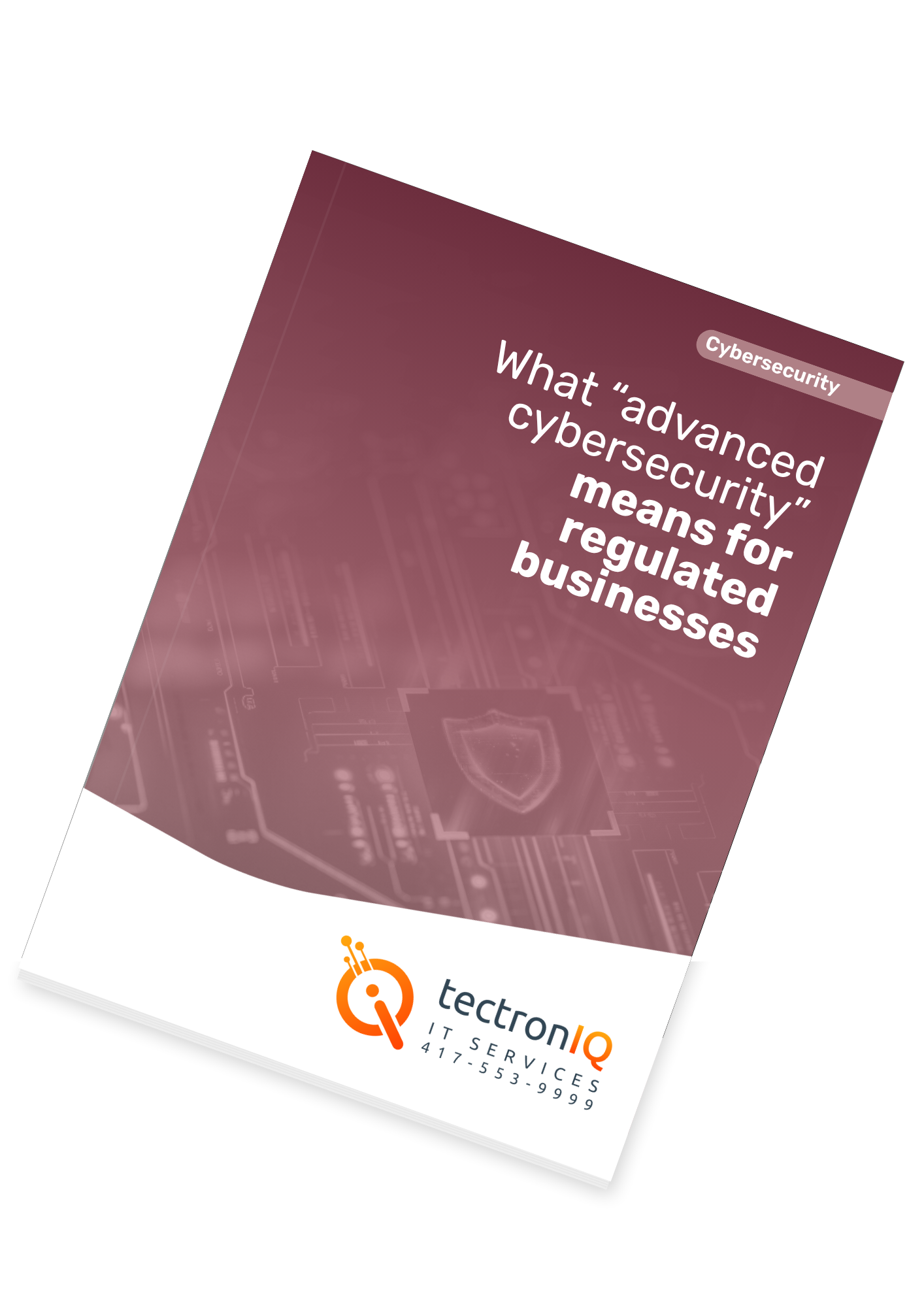
Our latest guide explores:
Whether you're preparing for compliance requirements, responding to client security questionnaires, or simply looking to better protect your organization, this guide provides valuable insights into what good cybersecurity looks like today.
Download your free copy now and discover how advanced cybersecurity can help your business stay protected, compliant, and resilient.
You’ve got a business to run. We’ve got your back. We help teams stay strong with fast, flexible IT—95% of calls answered in 20 seconds or less. Let’s make sure your tech works as hard as you do.